How are Pink Lab Grown Diamonds Made
Lab grown pink diamonds have emerged as a dominant alternative to rare and costly natural pink diamonds, delivering identical physical, chemical, and optical properties while offering stable supply and affordable pricing. Unlike natural pink diamonds that form over billions of years under extreme underground geological conditions, lab grown pink diamonds are produced through precisely controlled industrial simulation of natural gemstone formation environments. As professional producers in the synthetic diamond industry, we master the core technologies that replicate natural diamond growth rules and artificially induce stable pink hues in diamond crystals. The unique color of pink diamonds does not come from external dyeing or surface coating, but from microscopic structural changes and color center formation inside the diamond lattice, which ensures permanent and fade-resistant color performance for long-term jewelry use.
The fundamental logic of production lies in simulating the high-pressure high-temperature environment of the Earth’s mantle and optimizing gas-phase deposition reactions to guide carbon atom crystallization. Every parameter in the production process, including temperature, pressure, gas ratio, and growth cycle, is strictly calibrated to control crystal purity, lattice integrity, and color saturation. This refined industrial operation realizes controllable pink diamond formation, turning the accidental geological miracle of natural pink diamonds into standardized, scalable modern gemstone manufacturing.
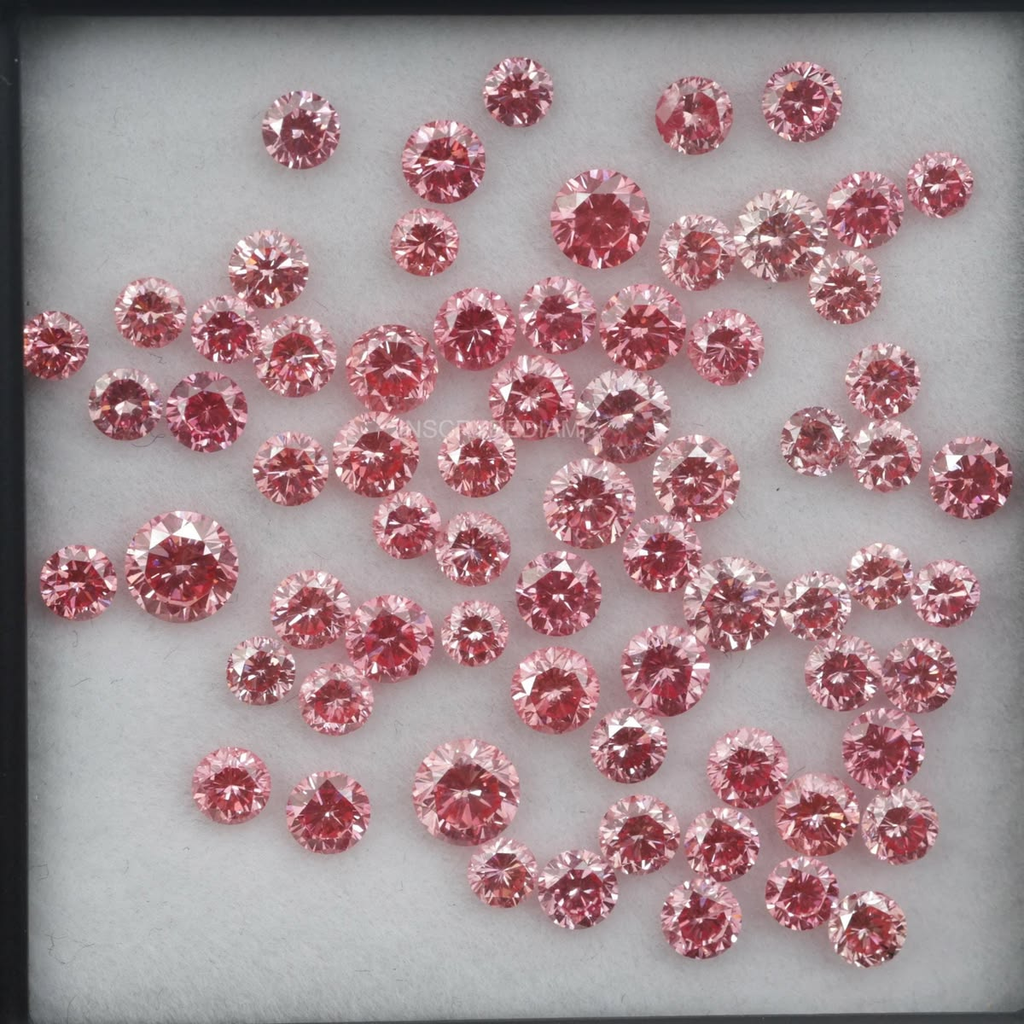
Two Mainstream Manufacturing Technologies for Pink Lab Grown Diamonds
The global lab grown diamond industry relies on two mature and reliable technical routes for mass production, namely HPHT (High Pressure High Temperature) and CVD (Chemical Vapor Deposition). Both technologies can produce high-quality pink lab diamonds, yet they differ significantly in growth principles, parameter control, color presentation, and post-processing requirements. As a professional lab grown diamond manufacturer & wholesaler, we deploy both production lines to cover diverse customer demands for different color grades, crystal sizes, and clarity levels of pink diamonds.
HPHT technology is the traditional synthetic diamond manufacturing method, which perfectly mimics the natural growth environment of underground diamonds. In a closed high-pressure press, graphite raw materials and diamond seed crystals are placed in a specific reaction cavity. The equipment generates ultra-high pressure of 5-6 GPa and high temperature above 1500°C, melting the metal catalyst and promoting carbon atom precipitation and crystallization on the seed surface. This method features fast growth speed and high crystal density, suitable for producing medium and small-sized pink diamonds with vivid color tones. Most HPHT pink diamonds exhibit bright, saturated pink shades with stable internal lattice structures, ideal for mainstream jewelry inlay scenarios.
CVD technology is an advanced modern diamond manufacturing solution with stronger controllability and higher crystal purity. The whole reaction occurs in a high-vacuum sealed chamber filled with mixed gas of methane and hydrogen. Through microwave plasma excitation, carbon-hydrogen bonds are decomposed, and free carbon atoms are uniformly deposited on the surface of ultra-thin diamond seed crystals for layered growth. CVD-grown diamonds have fewer inclusions and purer texture, with softer and more natural pink color gradients. By adjusting plasma intensity, gas proportion, and growth duration, manufacturers can precisely customize fancy light pink, fancy pink, and intense pink color grades to meet high-end jewelry customization needs.
Standard Industrial Workflow of Pink Diamond Production
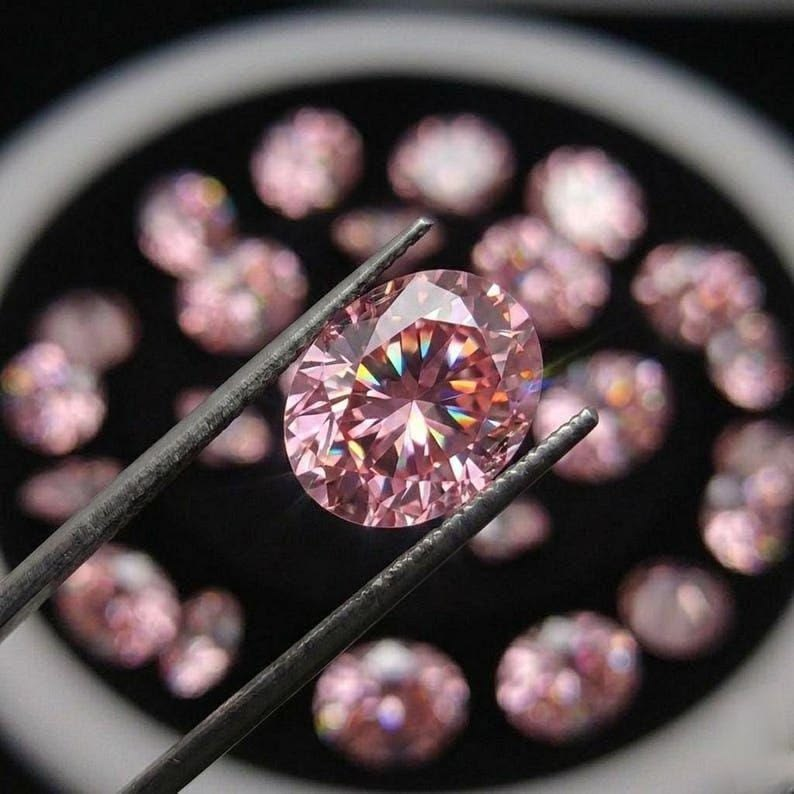
Complete pink diamond production covers multiple rigorous stages from raw material preparation, crystal growth, color optimization, to post-processing and quality inspection. Every link follows standardized industrial specifications to eliminate defective products and ensure consistent gem quality of finished stones. The entire process integrates material science, mechanical engineering, and gemology technologies, realizing precise artificial intervention of diamond crystal growth and color formation.
Raw material screening and pretreatment is the primary foundation of high-quality finished products. We select high-purity graphite and high-quality diamond seed crystals with complete lattice structures and low impurity content. Impurities such as nitrogen and boron in raw materials will directly affect diamond color and clarity, so strict purification treatment is carried out before production to control trace element content within the optimal range. For pink diamond customization, we target low-nitrogen diamond substrates, which are more conducive to forming stable pink color centers in subsequent processing.
Crystal growth is the core stage that determines the basic attributes of diamonds. According to product positioning, we select HPHT or CVD equipment for targeted lab diamond growth. In HPHT production, we adjust pressure holding time and temperature gradient to control carbon atom crystallization speed, avoiding lattice distortion and internal crack defects. In CVD production, we stabilize microwave power and gas flow rate to ensure uniform carbon deposition, forming flat and complete crystal layers. The growth cycle varies from 7 to 20 days depending on target carat weight; larger carat pink diamonds require longer stable growth cycles to ensure crystal integrity.
Color optimization and stabilization treatment is the key step to form pure pink hues. As-grown lab diamonds are usually colorless or slightly tinted, and professional post-treatment is required to induce pink color centers. We adopt precise electron irradiation and low-temperature annealing processes to modify the internal lattice structure of diamonds, forming stable NV color centers that produce natural pink visual effects. Different from temporary surface coloring, this structural modification penetrates the entire crystal, making the pink color permanent, wear-resistant, and never fading. After color treatment, all diamonds undergo constant-temperature aging treatment to lock color stability and avoid color deviation in subsequent use.
Finishing processing and hierarchical screening guarantee commercial value. After growth and color stabilization, rough diamonds are taken out for cleaning, cutting, polishing, and edge trimming to shape standard round brilliant, cushion, oval, and other mainstream cuts. Finally, professional gemologists conduct strict grading evaluation on color, clarity, cut, and carat, classifying products into different grades for wholesale and retail supply.
Quality Control Advantages of Professional Lab Created Pink Diamonds Manufacturer
As a professional lab created pink diamonds manufacturer, we establish a full-process quality control system to solve the common pain points of uneven color, unstable quality, and high defect rate in the industry. Many small-scale factories adopt simplified production processes, resulting in pink diamonds with shallow color, easy color fading, and tiny internal inclusions, which cannot meet high-end jewelry standards. In contrast, our standardized production system realizes full parameter monitoring and traceability of every diamond growth process.
In terms of technical control, we independently optimize equipment parameters and formula ratios, forming a mature proprietary process for pink diamond growth and color enhancement. Our HPHT production line precisely controls pressure and temperature fluctuation within an extremely narrow range, ensuring consistent crystal growth status for each batch of products. The CVD production line adopts intelligent plasma regulation technology to make carbon deposition more uniform, effectively reducing internal defects and improving diamond clarity and color uniformity. All color treatment processes are completed through physical means without any chemical coating, ensuring that finished products comply with international gem identification standards and can pass authoritative laboratory testing.
In terms of product diversity, we support full-spectrum pink diamond customization, covering faint pink, light pink, fancy pink, intense pink, and vivid pink grades. Meanwhile, we can produce various conventional and special cuts to adapt to different jewelry design needs, from small loose stones for jewelry matching to large carat high-end customized gems. Relying on large-scale production capacity and standardized management, we effectively control production costs while ensuring quality stability, providing high-cost-performance lab grown pink diamond products for global jewelry brands, designers, and wholesalers.
Industry Value and Market Prospects of Lab Grown Pink Diamonds
Natural pink diamonds are extremely scarce in nature, with only a handful of producing areas in the world, leading to sky-high market prices and unstable supply cycles. In contrast, lab grown pink diamonds completely break the resource limitations of natural gems. Through mature industrial manufacturing technology, stable and large-scale supply can be realized all year round, with prices only 40% to 60% of natural pink diamonds of the same grade. This huge cost advantage and supply stability make lab grown pink diamonds the mainstream choice for modern jewelry market consumption and commercial customization.
With the upgrading of consumer environmental awareness and the prevalence of sustainable consumption concepts, lab grown diamonds have gradually become the industry development trend. Lab grown pink diamonds avoid the ecological damage and ethical problems caused by natural diamond mining, conforming to the sustainable development concept of the global jewelry industry. At the same time, with the continuous innovation of manufacturing technology, the color saturation, clarity, and cut quality of lab grown pink diamonds have been continuously improved, and their appearance and durability are completely indistinguishable from natural pink diamonds to the naked eye.
For downstream buyers and jewelry practitioners, choosing standardized manufactured lab grown pink diamonds can effectively reduce procurement risks, shorten supply cycles, and enrich product line richness. As technology continues to mature and production scale continues to expand, the quality of lab grown pink diamonds will be further improved, and the product system will be more diversified, bringing broader market development space for the colored diamond jewelry industry.
Leave a Reply